Dual-Axis Stepper Motor Control System with Sensor-Based Automation
A client needed a compact control system capable of operating two stepper motors with programmable speed and direction while using sensor inputs as control conditions. MIRRENO developed and integrated a working prototype in approximately two weeks.
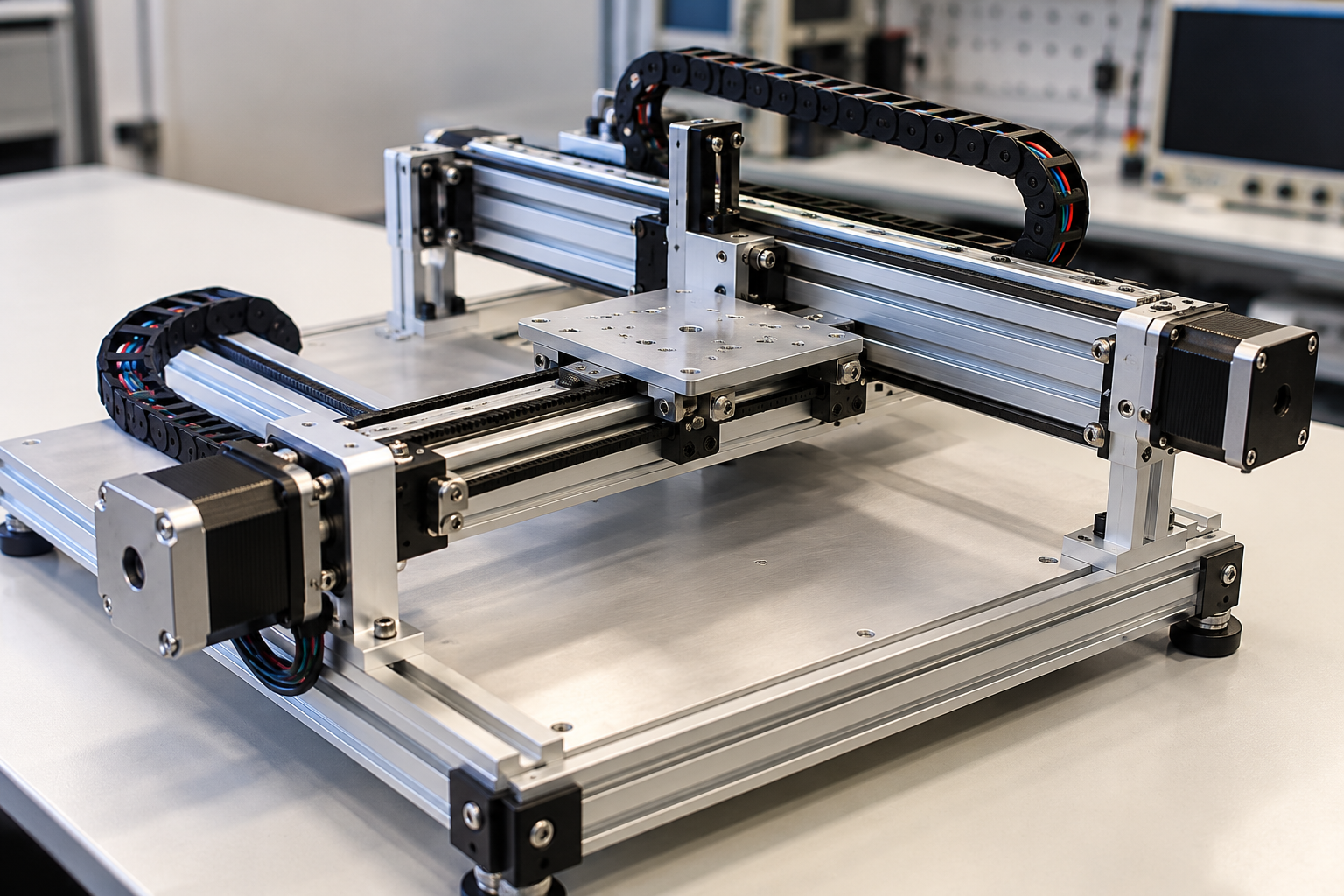
Control two motors based on real-world sensor conditions.
The client required a control system for two motors with adjustable speed and direction. Sensor inputs also needed to serve as control conditions, allowing motor operation to respond automatically to external events.
The project was time-sensitive. The objective was not to develop unnecessary electronics, but to deliver a practical and reliable working system as quickly as possible.
Use proven hardware where it makes sense. Engineer the parts that create value.
After reviewing the requirements, MIRRENO determined that developing a dedicated standalone microcontroller board would increase development time and cost without providing a meaningful advantage for this application. A proven Arduino-based control platform allowed the engineering effort to focus on motor control, sensor interfacing, application logic, electrical integration and testing.
A practical architecture built around the application.
The control architecture used an Arduino platform for processing and application logic, combined with DRV8825 stepper motor drivers and two NEMA 17 stepper motors.
Custom interface circuitry connected the control system to the required sensors and motor hardware. Application- specific firmware handled motor speed, direction, sequencing and sensor-dependent operating conditions.
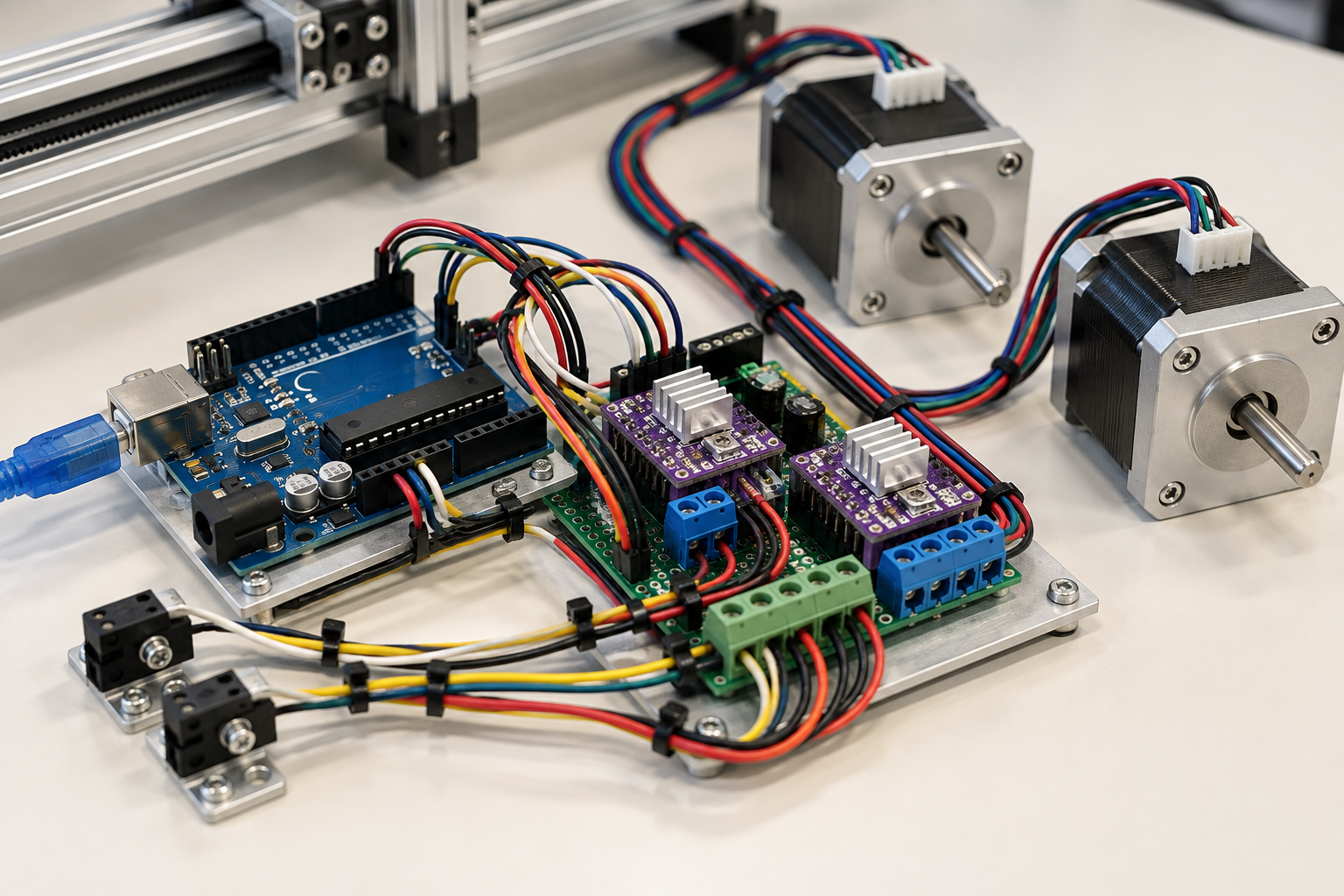
Hardware, controls and integration as one system.
MIRRENO developed and integrated the complete control solution rather than treating the controller, motor drivers and sensors as separate components.
- Arduino-based control and processing
- DRV8825 stepper motor drivers
- Two NEMA 17 stepper motors
- Sensor-based control inputs
- Programmable motor speed and direction
- Operation up to 2,000 steps per second
- Custom interface circuit board
- Application-specific control firmware
- System integration and functional testing
From requirement to working prototype in approximately two weeks.
MIRRENO handled the development process from requirements review through control architecture, circuit integration, programming, assembly and functional testing.
By selecting an appropriate existing control platform instead of designing unnecessary electronics from scratch, the project moved quickly from concept to a working prototype.
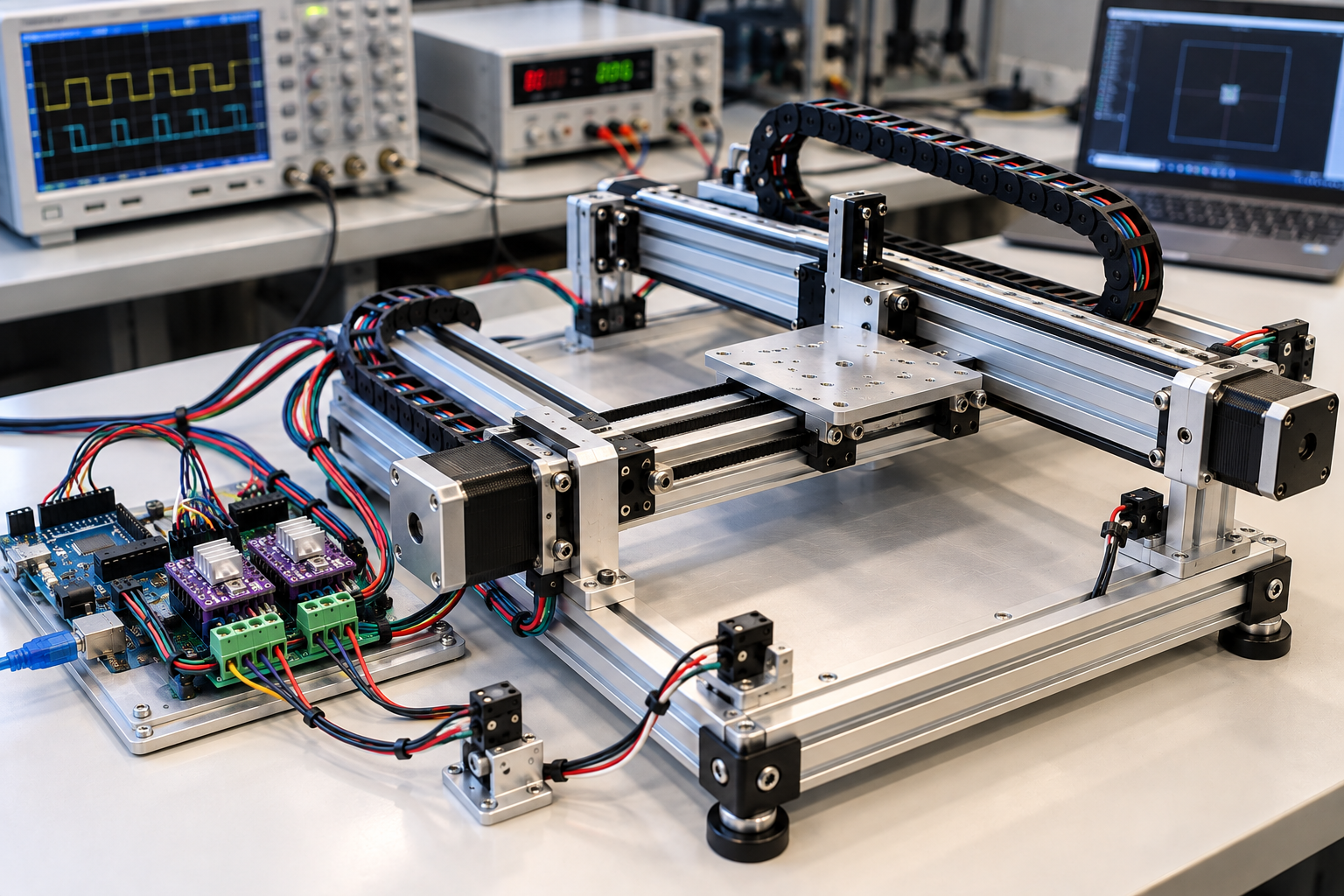
Functional performance verified at the system level.
The completed prototype was tested for motor operation, sensor response, control sequencing and integrated system behavior.
The completed prototype met the client's functional requirements while avoiding the additional development time and cost of unnecessary custom electronics.
The right solution does not have to be the most complicated solution.
MIRRENO focuses engineering effort where it creates practical value — selecting proven technologies where appropriate and developing custom electronics, controls, software and integration where the application requires it.
Have a Similar Challenge?
Send us your requirements, drawings, existing hardware or a description of the problem. An engineer will review the application and determine the most practical path forward.
START A PROJECT →