Project Overview
This engineering work explored the custom development and production of excimer UV light sources across three target wavelength families: 172 nm, 222 nm and 308 nm. The scope also included development of matched pulsed power supplies and the capability to integrate the lamp and driver into a complete application-specific product.
Excimer light sources place closely coupled demands on lamp construction, electrode geometry, discharge behavior, insulation, thermal management and power electronics. A practical solution therefore requires coordinated development of the light source and its electrical driver rather than treating them as unrelated components.
Engineering Challenges
Custom Lamp Construction
Adapt lamp geometry, electrodes, electrical interfaces and mechanical packaging to the intended UV application.
Pulsed Discharge Control
Develop high-voltage pulse drivers compatible with the lamp's ignition and operating characteristics.
System-Level Integration
Coordinate lamp, power supply, insulation, cooling, enclosure and operating controls as a complete engineered assembly.
Prototype Development & Bench Testing
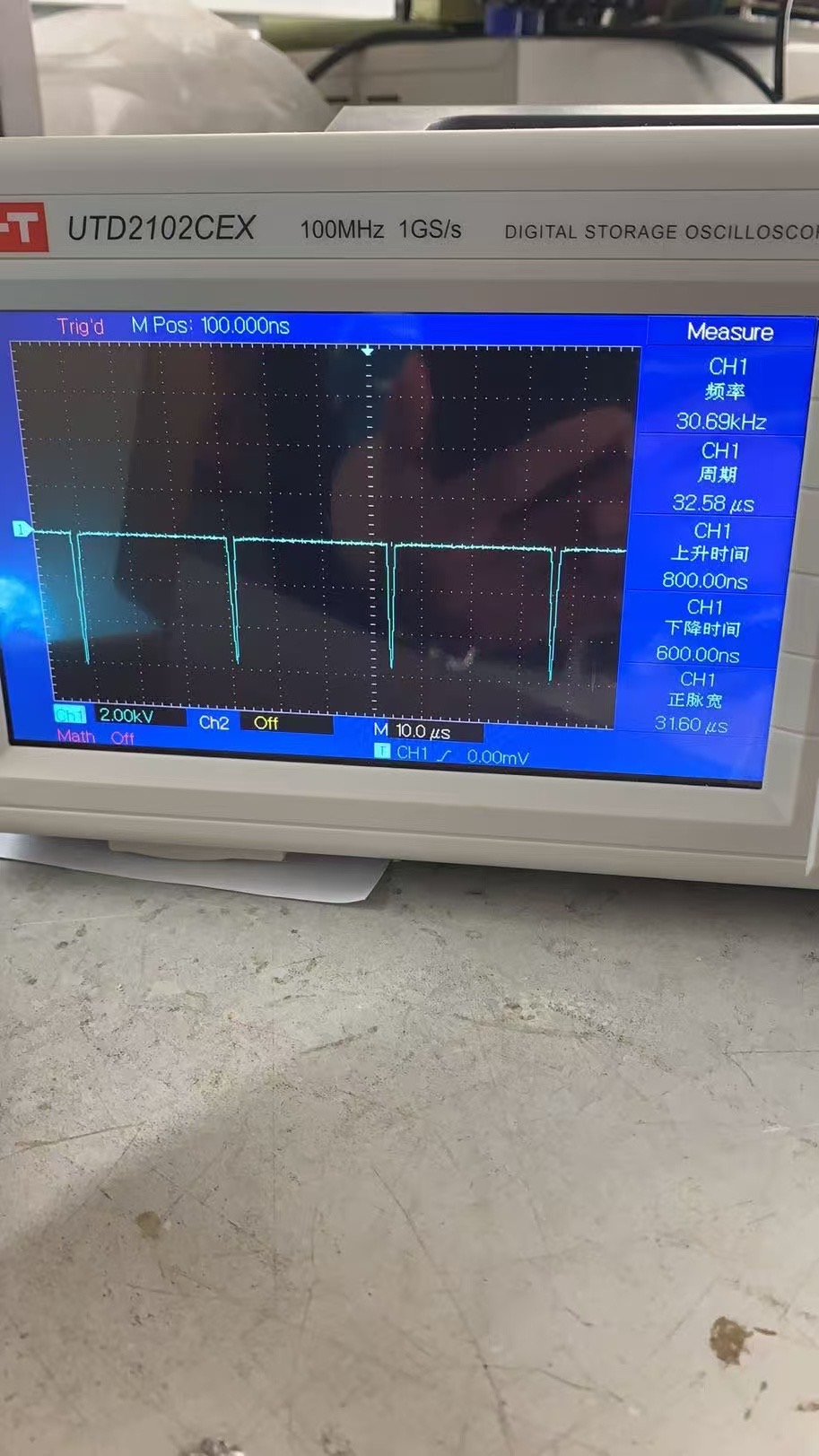
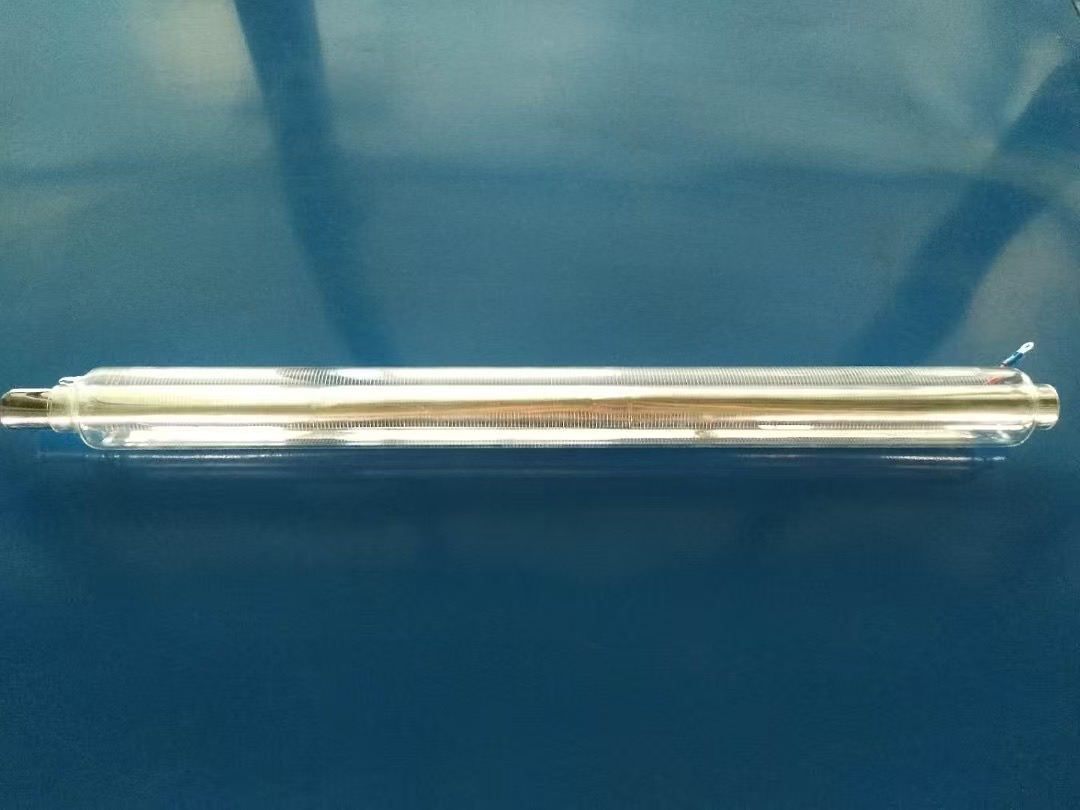
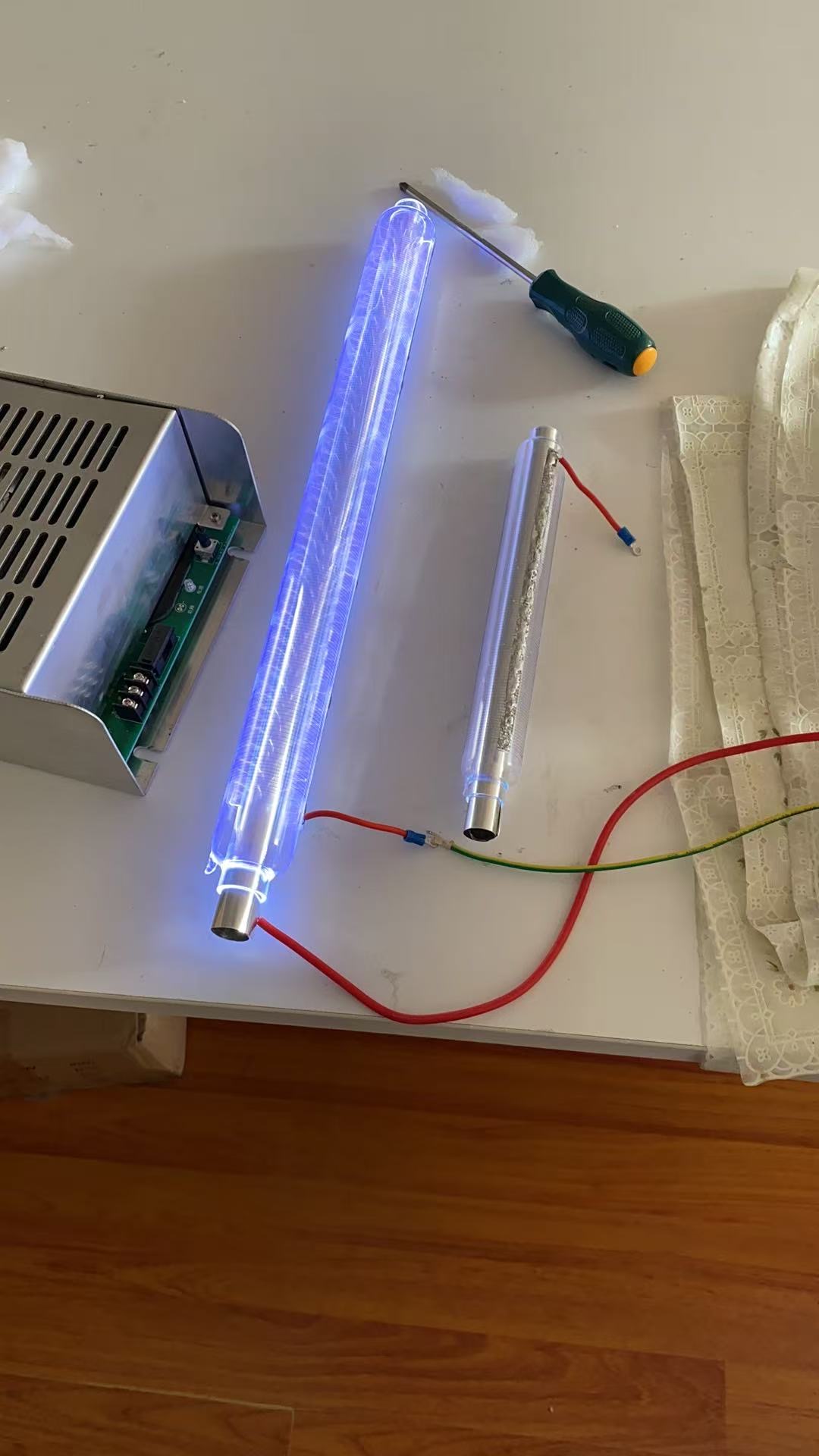
The development work included building tubular lamp prototypes, operating a lamp with a dedicated driver, and examining the electrical drive waveform on an oscilloscope. The illuminated prototype demonstrates an operating gas-discharge light source; the unpowered assembly illustrates a separate lamp configuration.
Custom Excimer Wavelength Platforms
172 nm
Vacuum-UV excimer source development for applications requiring very short-wavelength radiation and compatible materials and optical paths.
222 nm
Excimer source development for specialized UV systems where spectral filtering, exposure control and safety engineering may be critical.
308 nm
Excimer source development for application-specific near-UV systems with matched lamp geometry and electrical drive conditions.
These wavelength categories describe the stated development scope. Individual prototypes shown in the photographs have not been independently assigned to a specific emission wavelength.
Pulsed Power Supply Engineering
Rather than selecting a generic high-voltage supply, the development approach treats the lamp and pulsed driver as a matched system. Relevant engineering considerations include pulse repetition rate, discharge initiation, waveform shaping, electrical insulation, electromagnetic interference, protection functions and thermal behavior.
The supplied oscilloscope image shows a repetitive waveform with a displayed frequency of approximately 30.69 kHz. The image alone does not establish the lamp voltage, delivered pulse energy, electrical efficiency or optical output.
From Light Source to Application-Specific Product
The broader engineering offering can extend beyond the lamp itself to the high-voltage driver, control electronics, mechanical integration and complete UV equipment architecture. Possible application areas include industrial surface treatment, materials processing and specialized optical systems, subject to wavelength suitability, process validation and applicable safety requirements.
For UV products, particularly 172 nm and 222 nm systems, design reviews should address exposure hazards, shielding, interlocks, ozone generation where applicable, and regulatory requirements. No safety or performance certification is implied by this case study.
Engineering Value
- Custom development scope spanning 172 nm, 222 nm and 308 nm excimer source families.
- Integrated lamp and pulsed high-voltage driver engineering.
- Prototype fabrication, operation and waveform-level bench investigation.
- Potential to extend component-level development into complete application-specific UV systems.
Need a Custom UV Light Source or Pulsed Driver?
MIRRENO supports application-specific electrical, optical and system integration projects. Share your target wavelength, lamp geometry, operating constraints and intended application to start a technical discussion.
START A PROJECT →